background

SciCore

The Frontier of High-Performance RISC-V Acceleration

The SciCore Series defines Symquantum's portfolio of high-performance System-on-Chip (SoC) accelerators, meticulously engineered for data-intensive server enhancement, scientific computing, and hyper-scale AI/ML. Built upon an advanced open-source RISC-V Instruction Set Architecture (ISA), the SciCore platform provides massive parallel processing capacity and specialized I/O to integrate seamlessly into existing server infrastructures.


SciCore chipsets are the foundational intellectual property for systems requiring an exceptional cost-to-performance ratio, accelerating applications such as Genomics, Drug Development, Medical Imaging, Scientific Simulation, and Advanced AI Training.

sciscore-main

SciCore Architecture: Scalable, Specialized Compute

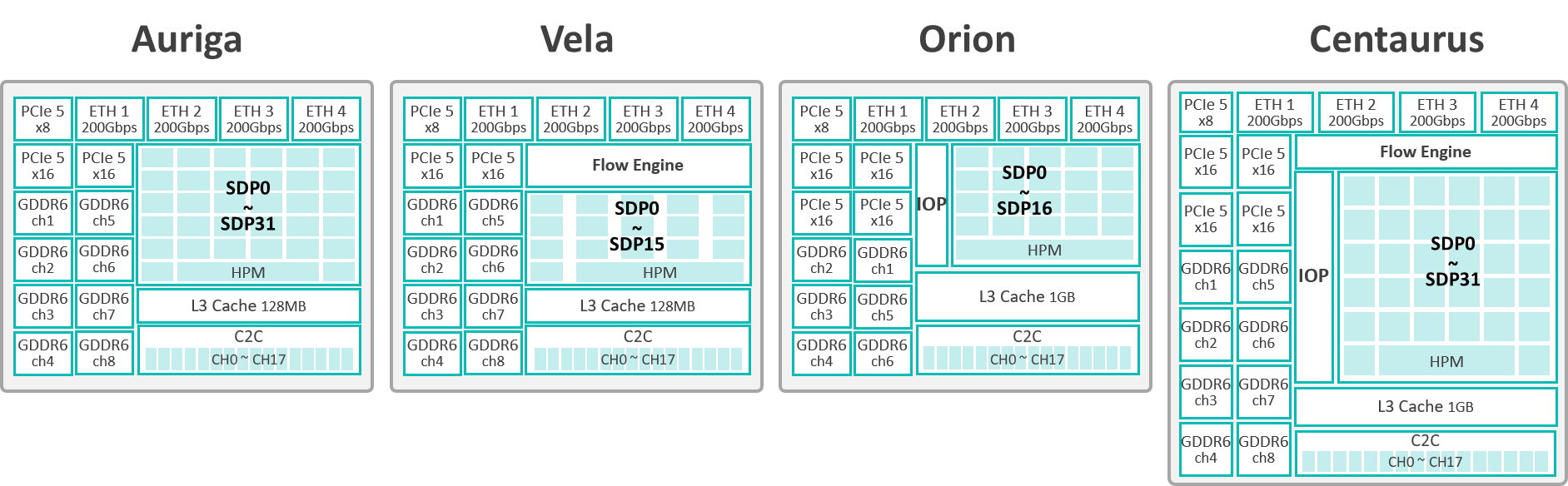
The SciCore series is based on the highly scalable Advanced Scale-Vector RISC-V (ASVR) architecture. These SoCs integrate deep L3 Caches and utilize high-speed DDR6 memory interfaces, high-lane-count PCIe Gen5, and dedicated D2D (Chip-to-Chip) interconnects to enable powerful parallelism.


The series is strategically composed of four specialized models, each optimized for a distinct role within the data center, all built upon the scalable ASRC (Advanced Scale-Vector RISC-V) architecture.

SciCore Product Differentiation

The models offer specialized configurations tailored for specific computational environments:

•
Auriga (General Purpose Acceleration):

serving as the entry model, Auriga provides balanced computational density utilizing ASRC0-31 cores for versatile scientific workloads. Its focus is on a reliable core count with standard I/O and memory configurations.

•
Vela (Network Optimized Acceleration):

This model is dedicated to high-throughput, low-latency processing essential for network function virtualization (NFV) and packet routing. It integrates a dedicated Flow Engine and is optimized for network throughput with high-speed 4x 200Gbps Ethernet (ETH) ports.

•
Orion (Storage Optimized Acceleration)

Orion is engineered for storage-heavy applications and database processing. Key differentiators include a dedicated IOP (I/O Processor), a significantly increased L3 Cache (1GB), and expanded PCIe lanes to ensure rapid data ingestion and high-speed data caching.

•
Centaurus (All-in-One High-Density Compute):

Centaurus represents the unified, highest-density solution. It combines the specialized features of the other models, integrating both the Flow Engine and the IOP with the highest core density and comprehensive I/O for maximum integration and versatility on a single chip.

sciscore-comparison

Applications

The SciCore’s high parallelism and bandwidth make it versatile for a broad range of high-performance uses, including specialized healthcare domains:

•
Artificial Intelligence:

Training and inference for large-scale LLMs, computer vision, and generative AI, leveraging high FP8 performance for efficient neural network processing.

•
Scientific Computing:

Executing large-scale simulations in physics, chemistry, and climate modeling, benefiting from flexible data type support (FP8, FP16, FP32).

•
Virtual Reality:

Enabling real-time rendering and physics simulations for immersive environments, training, or design applications.

•
Industrial Computing:

Driving real-time analytics, automation, and simulations for advanced manufacturing and engineering.

•
Cloud Computing:

Utilizing high-density OAM modules for hyperscale data centers supporting AI-as-a-service or HPC workloads.

•
Genomics and Precision Medicine:

Accelerating gene sequencing, variant analysis, and disease prediction. HPC-assisted DNA sequencing enables personalized and precision medicine.

•
Medical Imaging Processing:

Enabling rapid image reconstruction, lesion detection, and 3D modeling of CT, MRI, ultrasound, and PET data to assist clinical diagnosis.

•
Drug Development:

Accelerating protein structure prediction, disease screening, and drug discovery. HPC technology shortens R&D cycles to reduce costs.

•
Medical Big Data Analysis:

Supporting data mining, pattern recognition, and predictive modeling for electronic medical record analysis and personalized treatment planning.